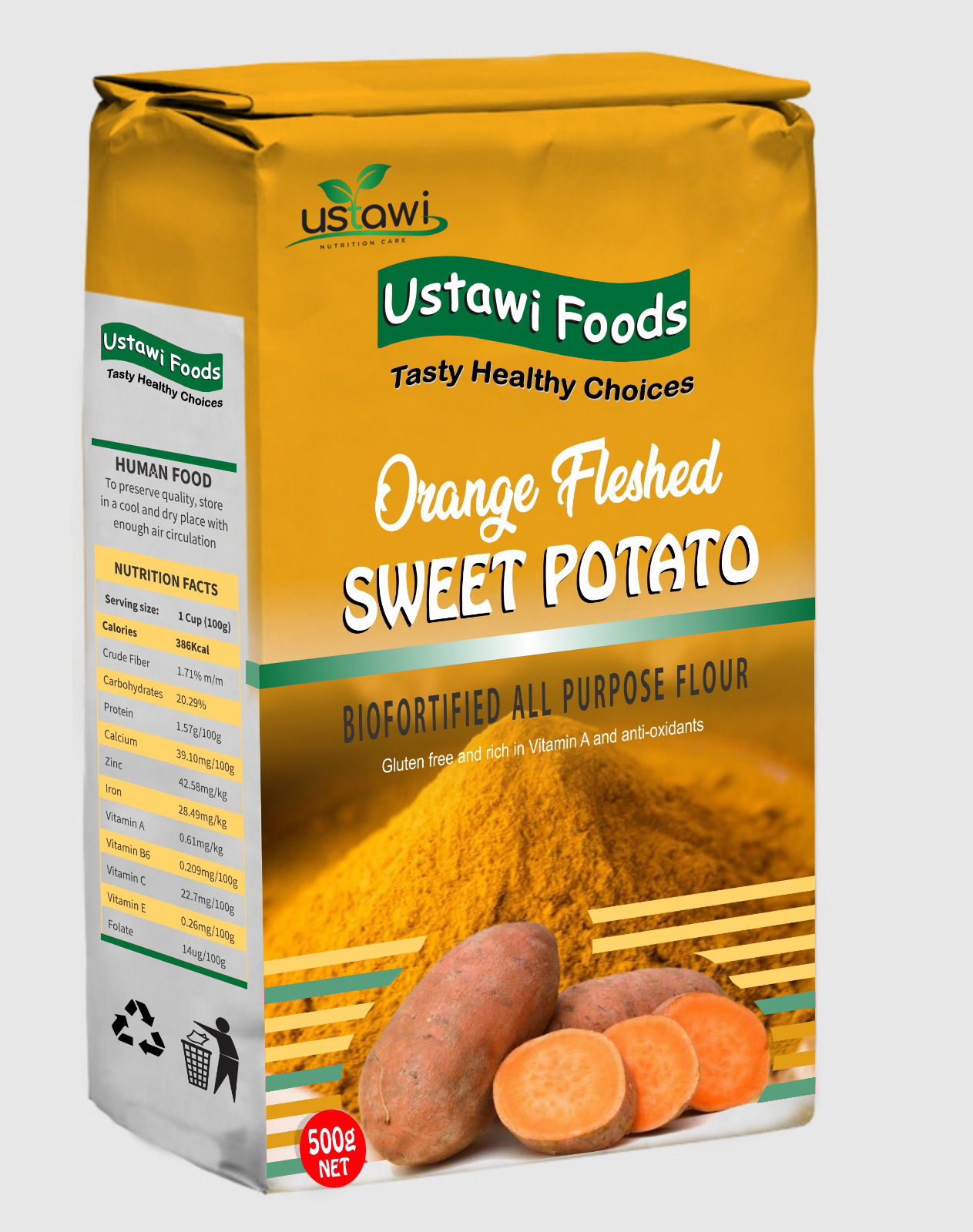

Sweet potato flour behaves differently from wheat flour because it is precooked and contains no gluten. That changes how you mix it, how much liquid it needs, and how it performs in baking. Here is what actually works in a Kenyan kitchen.
Start with cold water, always
The single most common problem with sweet potato flour is lumps, and the cause is always the same: adding flour to hot liquid. The starch on the outside of the particles sets instantly and traps dry flour inside.
Mix the flour with a little cold water first to make a smooth paste, then add that paste to hot water or milk while stirring. Because the flour is precooked, it thickens within about two minutes and needs no long simmering.
Porridge and uji ratios
For one mug of porridge, use two to three level tablespoons of flour. Start with a paste of roughly equal parts flour and cold water — about four tablespoons of water for two tablespoons of flour — then stir it into hot liquid.
If it thickens more than you like, thin it with hot water or milk rather than cold; adding cold liquid to a hot, thickened porridge makes it grainy. If it is too thin, whisk in another spoonful of dry flour that has been loosened in a little cold water first.
How much to substitute when baking
Sweet potato flour has no gluten, so it cannot simply replace all the wheat flour in a recipe. As a working rule, substitute up to one third of the flour and keep the rest as your usual flour.
It also absorbs more water than wheat flour, so expect to add extra liquid — usually one to two tablespoons per cup of flour used. Add it gradually until the batter looks right rather than following the recipe exactly.
The flour brings a natural sweetness, so you can normally reduce added sugar by about a quarter without noticing the difference. It also colours whatever you bake a warm orange, which is worth knowing before you make a white cake.
Where it works best
Pancakes, muffins and mandazi all handle a partial substitution well. Chapati works too, though the dough benefits from a short rest before rolling and a little more water.
For breads that need a strong rise, keep the substitution lower — around a quarter — because the missing gluten means less structure to hold the air.
Storing it properly
Keep the pack sealed in a cool, dry place out of direct sunlight and reseal it after each use. Flour takes on moisture from the air, and damp flour clumps even before you cook with it.
If you buy in bulk, decant what you will use over a few weeks and keep the rest tightly closed.