
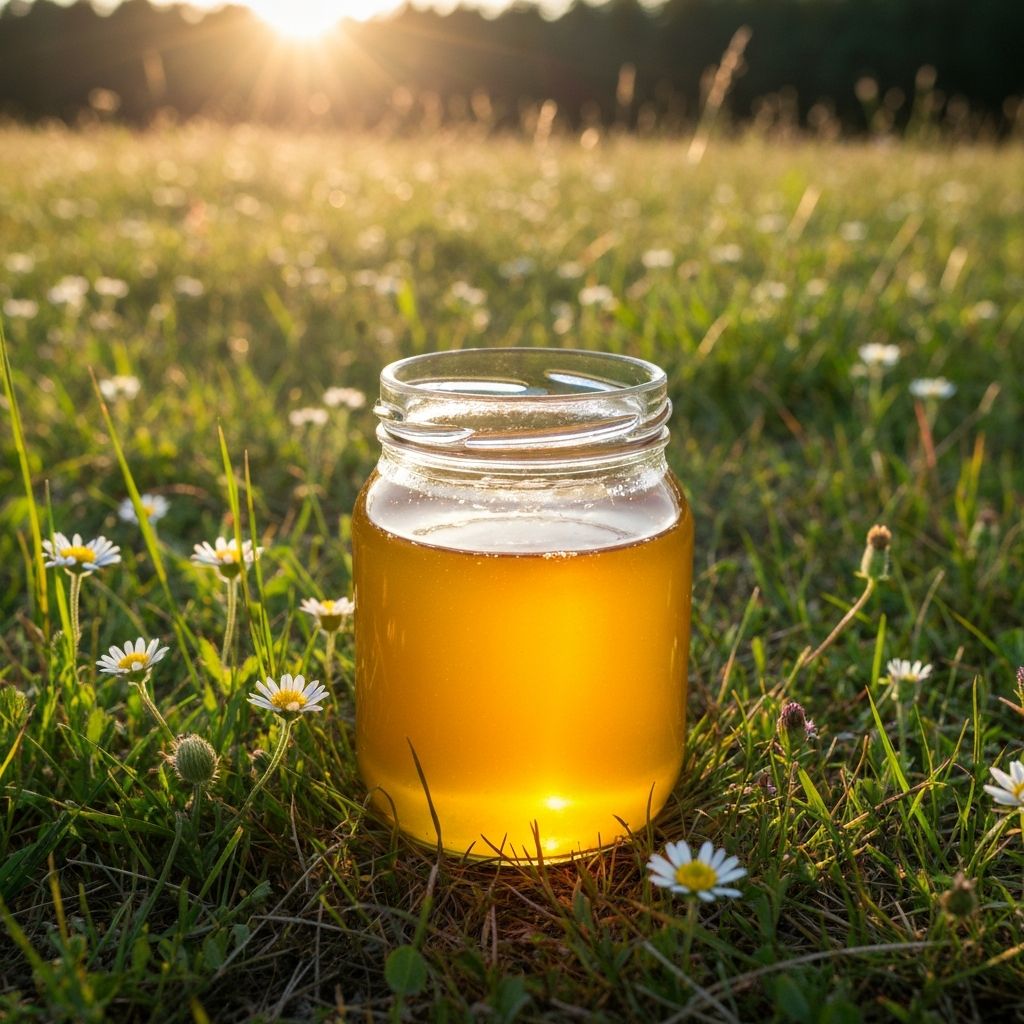
Raw honey is not simply a sweeter version of sugar. It carries aroma that heat destroys, it crystallises over time, and it behaves differently in baking. Knowing that makes it much easier to cook with.
Raw honey versus blended honey
Much of what is sold as honey in the region is blended with sugar syrup. You can usually tell by taste — blended honey is uniformly sweet with little aroma — and by behaviour, because it rarely crystallises.
Raw honey is bottled without heating, dilution or blending. It tastes of whatever the bees actually visited, which is why it varies from season to season. That variation is a sign of the real thing, not a defect.
Heat destroys the aroma first
Honey's distinctive flavour comes from volatile compounds that boil off. If you add honey at the start of cooking, you mostly taste sweetness by the end.
The practical fix is to add honey late. For a glaze, roast or fry your food most of the way first, then brush the honey on for the last few minutes so it caramelises rather than boiling away.
For drinks, let tea or water cool slightly before stirring honey in. You will notice the aroma much more.
Substituting honey for sugar in baking
Honey is sweeter than sugar and adds liquid, so a straight swap changes the texture. As a starting point, use about three quarters of the sugar the recipe asks for and reduce the other liquid by roughly two tablespoons per cup of honey.
Honey also browns faster than sugar. Drop your oven temperature by around 10°C and check earlier than the recipe suggests.
When honey crystallises
Crystallisation is normal for raw honey and is not spoilage. It happens because glucose separates out of the solution, and it says nothing about quality.
To return it to liquid, stand the jar in a bowl of warm water for a few minutes. Avoid boiling water and avoid the microwave, both of which damage the flavour you paid for.
Telling raw honey from blended honey
Pour a little into a glass of water. Raw honey tends to sink and settle rather than dissolving immediately, because it is denser and less processed. Blended syrup disperses quickly.
Smell it before you taste it. Raw honey carries the aroma of whatever the bees foraged on — sometimes floral, sometimes slightly resinous. If it smells of nothing but sweetness, that is worth noticing.
And watch how it behaves over weeks. Raw honey usually crystallises eventually. A jar that stays perfectly clear and pourable for a year has almost certainly been heated or blended.
A few everyday uses
Stir it into tea once the water has cooled a little, so you keep the aroma. Drizzle it over uji, porridge or pancakes instead of sugar. Use it in a glaze for roast chicken or vegetables, added in the final few minutes.
It also works in salad dressings, whisked with lime juice, oil and a pinch of salt, where its thickness helps the dressing cling.
Storing it
Honey keeps at room temperature and does not need refrigeration — in fact, cold speeds up crystallisation. Keep the lid closed, keep it dry, and keep water out of the jar.
