Uji is one of the most everyday foods in Kenya, and the flour aisle has become crowded. This is a practical guide to reading the pack and choosing flour that suits how you actually cook.
Check whether it is precooked
This is the difference between a two-minute breakfast and a twenty-minute one. Precooked flour has already been heat-treated, so it thickens as soon as it meets hot water. Raw flour needs a sustained simmer, and it lumps far more easily.
The label should say precooked or instant. If it does not say, assume it is raw and cook it longer.
Look for a blend rather than a single grain
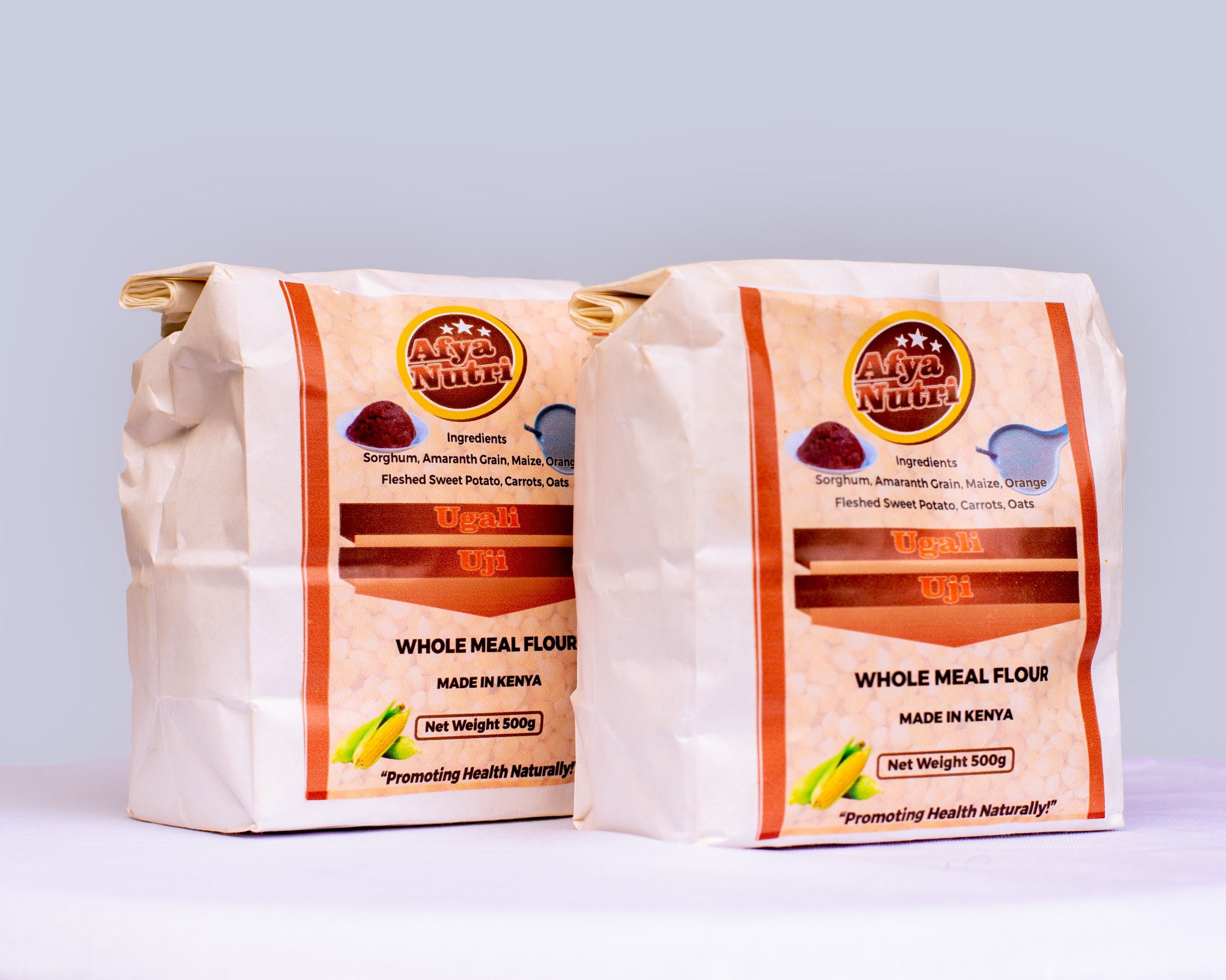
Single-grain flours — plain millet, plain sorghum — are cheaper but nutritionally narrow. Blends combine grains and seeds so that one serving carries more protein, fibre and minerals.
A good blended flour names its ingredients on the front or in the ingredient list rather than saying only 'cereals'. Sorghum, pumpkin and amaranth together give a considerably better nutritional profile than refined maize alone.
Read the nutrition panel, not the marketing
Look at protein and fibre per 100g. For a blended grain flour, expect protein in the region of 5–8% and dietary fibre around 15–20%. If a pack claims to be nutrient-rich but carries no panel at all, treat the claim with caution.
Check the fat figure too. Grain flours should be low in fat, and mostly unsaturated.
Consider how it was milled and where it came from
Flour milled close to where the grain was grown is usually fresher, and buying it supports the farmers who grew the crop. If the pack names a county or a specific sourcing arrangement, that is a reasonable sign.
This matters for taste as well — older flour tastes flat and can turn slightly bitter, particularly with amaranth.
Buy a size you will finish
Flour loses flavour and takes on moisture after opening. A 2kg pack that lasts a month is better value than a 10kg sack that sits open for six months.
Store whatever you buy sealed, cool and dark, and reseal it every time.
Questions worth asking the seller
If you buy flour loose from a market rather than in a sealed pack, ask when it was milled. Freshness is the single biggest difference in taste, and a miller who knows their dates will tell you without hesitating.
Ask what is actually in the blend. "Mixed flour" can mean almost anything, and some blends are mostly refined maize with a small proportion of the grains named on the front. If the seller cannot tell you the proportions, the pack probably does not either.
Finally, ask whether the flour has been precooked. It determines how you will cook it, and it is the question most likely to reveal whether the seller knows the product.
Matching the flour to how you cook
If your mornings are rushed, a precooked blended flour is the practical choice — it is ready in about two minutes and needs no supervision.
If you bake regularly, keep a separate finer flour for cakes and pancakes, since coarse blends give a heavier crumb. And if you are cooking for a household with young children, a blend carrying sorghum, pumpkin and amaranth gives more per serving than a single refined grain.